Do Feeling Wheels Help Children?
The Princess of Wales recently revealed that her youngest child, Prince Louis, uses feeling wheels to help express his emotions. The 5-year-old and his classmates have access to the wheels and can use colours and pictures to help express how they are feeling.
Feeling wheels sound like a good idea, but what are they, and how do they work?
What is a feeling wheel?
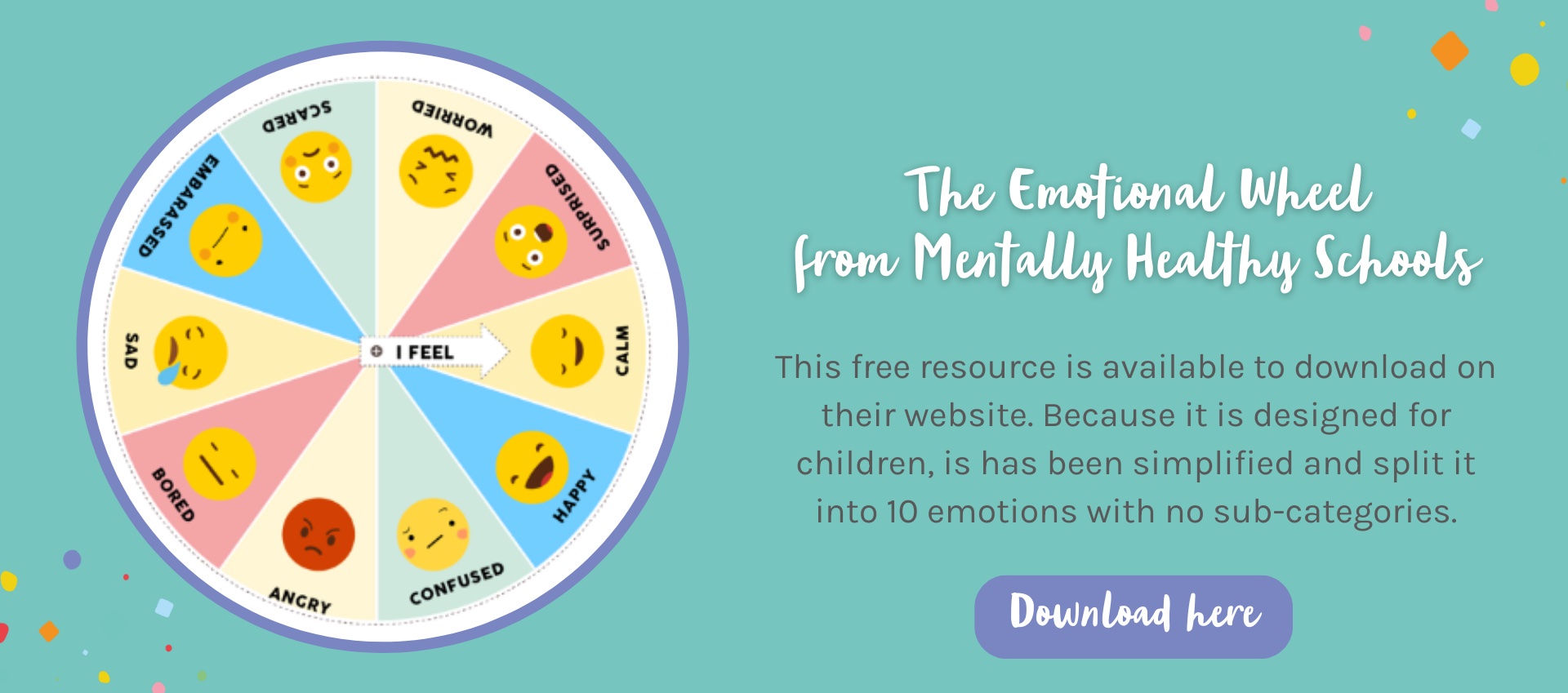
Feeling wheels are circles made up of different segments, usually in different colours, to depict different emotions. They are sometimes known as colour or emotion wheels. The initial circle of feelings comprises our primary emotions, but they can be expanded further, with larger circles showing secondary or tertiary emotions. This illustration from Mentally Healthy Schools is a great example.
Feeling wheels are a fantastic tool for child development as they allow little ones to express their emotions, often when they don’t have the vocabulary to do so.
Children using the feeling wheel will select an initial emotion and can work with increasing specificity to help articulate their feelings.
What are the benefits of feeling wheels?
There are considerable benefits to child development through using feeling wheels. The wheels can positively impact children’s social and emotional development from the first use. They can help foster self-awareness and reflection and, of course, can help with communication skills and vocabulary.
The latter feeds into helping develop your child’s emotional literacy and helping them better express how they’re feeling, whether that’s sad, happy, angry, surprised, scared or something else.
As your child grows and moves through school into the pre-teen years and beyond, the long-term impact of understanding their emotions develops into a greater sense of empathy, better stress management and improved conflict resolution skills.
These emotional and social skills are a solid grounding for building happy, healthy children and young adults.
You may also know some grown-ups who could benefit from using a feelings wheel and better communicating their emotions!
Top Tips for Using a Feeling Wheel
The first thing to remember with child development is that you are not alone. There is a vast array of resources to support you. This could be online tools or baby and toddler classes that help physical, mental and emotional wellbeing.
When it comes to talking about emotions and using a feeling wheel, start by actively encouraging your child to talk about how they are feeling. Model this behaviour yourself by communicating your feelings and creating a safe space so they feel comfortable talking with you.
You can use a tool like a feeling wheel regularly, even daily, to check in with your child (and even the wider family!) about their emotions. Building this habit means your little ones will be more comfortable and expressive when discussing their feelings.
To take this a step further, you could use imaginary situations, story-telling or real-life examples to help give more context to the emotions.
Our final tip is to keep the feeling wheel somewhere everyone will see it, like on a noticeboard or fridge. It’s front of mind, and even the grown-ups can use it to check how they feel. Having the feeling wheel visible makes it less daunting and part of the daily routine.
Child Development in Action
The Princess of Wales shared details about the feeling wheel as part of her vision for nurturing children into healthy, confident adults. This ethos is something we echo at Little Starts Gift Cards. Many of the classes that accept our gift cards work to promote physical, mental, and emotional well-being for both children and their parents.
By choosing a gift card for babies, toddlers, or preschool children, you are helping support their development whilst simultaneously creating beautiful memories.
Search for classes near you here.
You might also like…